Category Archives: Uncategorized
WSW Chat: What is Bad Writing?
Are ratings/review important in 2024?
I’ve had an unplanned opportunity to test this question and it seems that they may be less important than we realize. When I switched distributing my ebooks to Apple from Smashwords to Draft2Digital at the beginning of the year, all the books lost their ratings and reviews. Since then they’ve had essentially no ratings/reviews. So how did this affect my sales to date?
Not at all. Indeed, in the last 8 months I’ve already sold more ebooks on Apple than I did in 2023. It would seem that having no ratings has had no adverse effect on sales, and perhaps even a positive one. Now my experience may be an outlier in that all my books are free, and my customers might be less persnickety than buyers of books that actually cost money. Those readers might rely more on ratings/reviews in making their selections. Who knows? Another factor is that most of my books are now audiobooks on Apple which might make my books more visible plus there may be some double audio/ebook sales as well.
Nevertheless, my takeaway is that we probably need not lose sleep at night wishing for ratings and reviews, at least for sales’ sake. They’re certainly nice to receive – thank you, Audrey – but these days they may contribute less to sales than we might imagine.
Speaking of audiobooks on Apple, all but three of my books have now been converted and sales have grown each month. Audiobooks now account for more than 46% of my total book sales on Apple. And to follow up on my recent move to unpublish all my books on Smashwords and move them over to D2D’s distribution to the Smashwords store – the move has continued to pay off big time. I’m actually selling more books on Smashwords than Amazon, after selling only 4 books on Smashwords in June. Go figure.
EDIT: In response to Audrey’s comment, I first looked at my books on Smashwords today and discovered that I’d lost all my ratings and reviews for those books there as well, no doubt by switching my books on my own rather than waiting for D2D to get around to it. And the remarkable thing is that they are selling far better than they had been with their ratings. (And they weren’t bad ratings.) I still think that showing up as new books was the key, in that new readers may have pick up one or two, like them, and have gone back to pick up more titles over these last two months. Still, it is interesting to see that blank slate books are selling so well, and have been given a new lease on their shelf life.
Why I’ll Never Be a Great Writer
While Mark was contemplating why he would “never be a good writer” I was thinking along the same lines, but from a different perspective. I was thinking of all the top-level reasons why my books would never make any of the various YouTube booktubers’ “My Ten Favorite Books” list. Or to put it more broadly, why my books will never be considered great.
From all the lists I’ve viewed, I think that it is safe to say that the overarching element in creating the type of books that end up on these lists, is ambition. The author needs to be ambitious, and then write ambitious books. This ambition has several attributes, though not all are necessary to make a book “great,” but at least some of the characteristics I’ve listed below must be present.
One aspect is scope. Favorite books are often praised for their ambitious world building and the sweeping scale of their story. Long, elaborate sagas – often multi-volume ones – set in massive, detailed worlds, with unique societies – impress readers, at least in the fantasy genre.. And even in literary fiction, creating a compelling immersive world is often heralded.
Much more important to writing a classic is tackling big, important, and universal themes. Books that discuss or illustrate important social or political issues like racism, sexism, colonialism, alienation, religion and the human experience are often held up as great books. They may also explore emotional themes like grief, loss, depression, as well as friendship and love. However, on the whole, it seems that the darker the theme, the more impactful and important the story is perceived to be. In short, they address universal themes that transcend the story itself. And in science fiction, an amazing original idea might be enough. One key to greatness is weaving something thoughtful and original to say on an important subject into the story. Indeed, themes and ideas are so important that some books are great despite being “challenging” to read and to understand. Some might even be unpleasant to read. Making the reader think is a hallmark of great books. You know, a “eat your vegetables” sort of thing. It’s good for you.
But perhaps the most important ingredient in a great book seems to be its emotional impact. Many readers read in order to feel. The more a book makes a reader feel like they are actually living inside the story, the more memorable the book. Though ,again, like with themes, it seems like the darker and starker the emotions the story generates, the more people appreciate it. Perhaps experiencing powerful events and their accompanying emotions, at a safe remove from reality, is the ultimate goal of entertainment.
Another ingredient can be characters. Deep, developed, memorable characters make for memorable books. Memorable characters are often mentioned as reasons for people loving certain books, and indeed, sometimes they are the main reason for some readers. Still, I have a feeling that they play only a supporting role in most great books, often for the emotional impact their fates generate. A novel with a cast of memorable characters may be enjoyed and remembered, but I’m not sure characters alone are enough to make anyone’s top ten books.
And finally, we can’t forget the craft of writing itself. There is no one standard of great writing, but readers know it when they read it, though this is probably the most subjective attribute of a great book. However, like characters, I doubt that writing style alone lifts a book to greatness.
Are there more characteristics that make books all time favorites and classics?
As I said, this is a list of some of the reasons why I’m not a great writer. I’m not ambitious. I write pleasant books without tragedies. I write them as cleverly as I can. I write them to take my readers somewhere else; a “You can’t get there from here” sort of place, and in the company of mostly pleasant people. I write books that you’re free to forget – and then maybe read again someday. In short, not a recipe for greatness. But like my books, not a tragedy either.
How about you? How ambitious are you as a writer? What do you aspire to achieve in your work?
Why I’ll Never Be A Good Writer
— Mark Paxson
Audrey Driscoll just posted to her blog about the differences between “writer brain” and “editor brain.” It prompted me to write this post, which I’ve been pondering for a couple of weeks.
Awhile back, somebody tweeted something about writers who don’t think they’re good writers. I replied that has pretty much been my constant mental battle. I’ll never consider myself a good writer.
I’m just a writer. Because I just write.
Here are some things I see other writers talk about that I don’t do, or don’t think about while I’m writing. But first, a reminder. I’m a pantser of the truest sort. I come up with an idea, typically a scene, or a situation for a character, and then start writing. Which leads to a few things.
I don’t outline. I don’t do character sketches or character interviews. I don’t have a board on my wall where I keep track of things, or what some may do in terms of a mood board. I don’t come up with playlists to listen to while I write. I do nothing to create a physical environment to write a specific story. I just write.
While I write, I don’t consciously think about character development. Or plot development. I start with the idea and go from scene to scene. I don’t think about a three act structure or that a precipitating incident must occur by a certain point in the story. (Which is actually concerning me in my current effort because I spend thousands of words getting the main character to the setting at which all of the drama will occur.). I just write.
A co-worker asked me this week to review a draft brochure she had written. She wanted me to help her identify where she could convert passive sentences to active. I had to tell her that I really don’t know the difference between the two. That concept doesn’t even register while I’m writing. To help her, I had to Google ‘active v. passive’ and learn what the difference is. Same too with show, don’t tell. I think I know this a little bit better, but it still is something that I simply don’t think about while I’m writing. I just write.
Nor do I really think of either of those things while editing. Which is another thing I don’t really do. I don’t do any developmental editing on my writing. I don’t do line editing (I’m not even sure what that is, except what it sounds like … reading a story line by painful line.) What I do is edit as I go, but it’s mostly just finding typos, fixing some word choices, and that type of thing. And also, finding inconsistencies that have to be fixed. Beyond that, however, I don’t do much. And after I type ‘The End,’ I do a read through and tweak a few things here and there and that’s it.
The local writers group I belong to is putting on a workshop in a few months. The title is Crafting Compelling Characters. Based on my approach to writing, I can’t imagine how this works. I add details about characters as I go, without any real forethought or planning. Oh, Hannah and Alexander have finally arrived at the lighthouse, 17,000 words into the story. Let’s show a little more about how they are each reacting to arriving on the rock, and let’s reveal a little more about Solomon Thrice, who will be the bad guy. But none of it is really done consciously in my mind as “character development.” It’s just a part of the story and how to get from Point A to Point B to Point C. As I said, I just write.
(Edited to add: Also, I didn’t start writing as I left the womb. Nor did I start writing as a child, a teenager, or a young adult. In fact, I hated writing for much of that time. I only started writing fiction when I was almost 40 years old. I wonder if the lack of writing at an earlier age helped or hindered me now.)
I have absolutely no doubt there are many other things good writers do that I don’t do, or think about. I’m curious … what are the things you do to try to improve your writing to achieve th level of being a good writer? What are the things you don’t do that you think could help?
Debut Again!
Just a quick tip for authors who have their books listed on Smashwords. You can get a second chance at being a debut author. Draft2Digital is slowly migrating Smashwords titles to D2D, but if they haven’t done this already for your books, you can do it yourself. You might consider doing so, as there is an unexpected benefit from doing it – your books, when added to the Smashwords store from D2D, are treated as new releases. As such, they show up on the landing page of Smashwords, where they will likely be seen by a lot more people than wherever they are currently lurking. I discovered this after I unpublished my books on Smashwords and then went over to D2D, where I already had all my books listed, and checked the Smashwords box on their list of stores to get them back into the Smashwords store. Being featured as new releases made a brief, but nice, increase in sales. If you don’t already have your books listed on D2D you’ll need to set them up there, but it’s a very simple process to old Smashwords hands. While your mileage will very, it could result in something like the bump in sales you get upon releasing a new book.
WSW Chat: How Do You Know When You Have a Story Idea?
Failure’s Freedom
“If you ain’t got nothing, you’ve got nothing to lose.” Like a Rolling Stone – Bob Dylan
Those two lines from Like a Rolling Stone are an anthem for me. I sing them along with Bob every time the tune comes up in my “Liked Music” playlist. I love the insight into freedom they imply. I think they could, and should, be the anthem of the vast majority of author/indie publishers as well. Them’s that aren’t making money at it. With nothing to lose, we’ve the freedom to write exactly what we want to write, how we want to write it. In short, it allows us to;
“Be yourself, no matter what they say.” An Englishman in New York – Sting
Stories are art. They’re also a consumer product, so it’s understandable that we’re tempted to write the stories we think – or hope – readers will buy and enjoy. But if you’ve been publishing stories for any length of time, you know that discovery – merely giving potential readers the opportunity to choose to read your book – is an almost insurmountable barrier to finding readers, and thus, commercial success. So, given the near virtual certainty of commercial failure, unless you’re a social media celebrity or a well heeled and wily entrepreneur, we author/publishers can safely ignore commercial considerations and simply write stories that appeal to us. We can create pure art, art as a unique expression of our creativity, and then publish it for the rare reader who somehow stumbles upon it and appreciates our vision. Their numbers don’t count, though I should point out that every popular genre, sub-genre, trope, and story beat was once a unique and original expression of some author. We’ve nothing to lose by swinging for the fence.
I should also point out that author/publishers can be in a unique position in the publishing world, in that we can actually publish our undiluted vision. In traditional publishing, authors are not trusted to publish the books they write. Books in traditional publishing, and even in indie-publishing these days, if you listen to the experts, are ensemble creations, co-produced with the help of various editors who work to make it better than the writer’s original version. And since these books are definitely commercial products, “better” probably means more salable. Some, maybe even most authors, appreciate this help – in the various acknowledgments at the end of books, they often give a great deal of credit to their editor. Stockholm syndrome perhaps? But as an author/publisher we can, if we’re brave enough, publish our work in its pure form. We can be ourselves, no matter what – any editor – might say.
Still, you’re likely thinking, we must consider the readers. What readers? Well, to be less snarky, let me rephrase that to say that, we should trust readers. All we owe them is an honest blurb, a sample of our writing, and the best book we can write. We need not concern ourselves with their tastes and expectations. We needn’t worry if they’ll like it or not. If I learned one thing in art, it is that someone somewhere will always appreciate anything. There’ll be readers who will like any story we write. And if we write a book that pleases us, we can at least be certain it pleases someone. A bullet dodged.
Given the steep odds against any commercial success, it seems to me that following our unique vision, without compromise, is actually the wisest course to follow. With nothing to lose, why not?
Of course you all do that already, right?
Creating Auto-Narrated Audiobooks on Google Play
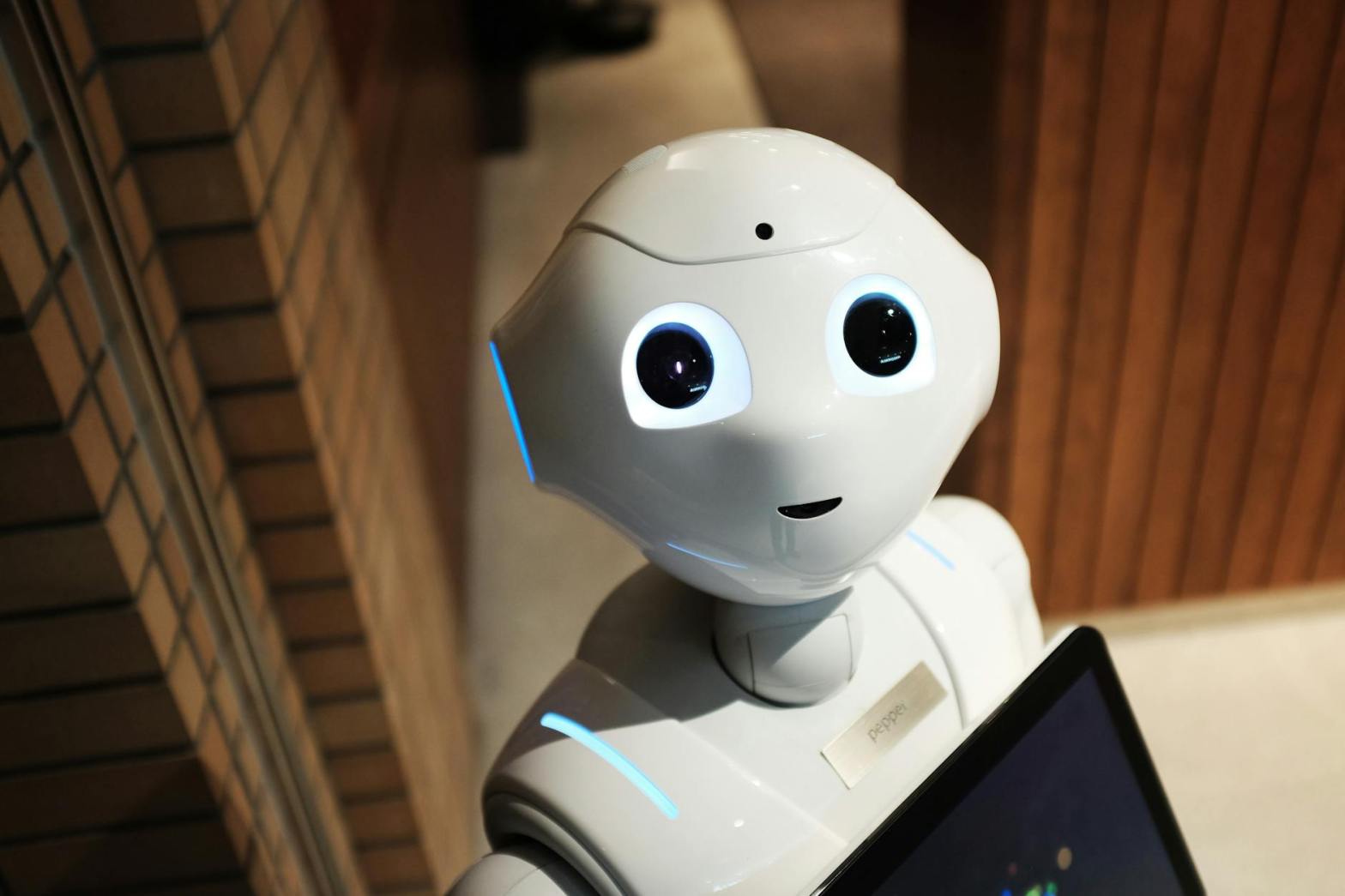
Based on Chuck Litka’s post Adventures in Audiobooks, I decided to go with Google’s audiobook option only. So this post refers exclusively to auto-narrated audiobooks on the Google Play platform.
I have finished setting up and editing one audiobook, which is now live. From that experience, I can make the following observations.
Once you have an ebook live on Google Play Books, it’s surprisingly easy to create an audiobook. That said, I fumbled my way through the process, and my first book went live in an unedited state. I will have to figure out how to keep that from happening with any others I publish, because it is absolutely necessary to listen to the entire book before finalizing it. There are step-by-step instructions in something called the Auto-Narrated Audiobooks Learning Center, but when I started the process, I found myself being hustled through a number of steps without really knowing what was happening. No harm done, however, as far as I know.
On the plus side, once the audiobook was live, it was easy to whip it into shape. I called up the Audiobook Text, which allowed me to both listen to and see the text. I could start and stop playback, make changes in the text, and save them. It’s possible to have more than one version of an audiobook (with different narrator voices, for example), but only one can be live.
There is a large number and variety of narrator voices available, including male and female voices in different age ranges (18-30, 31-45, 45-60, and 60+) with “standard” American, British, or Australian accents. Voices for a few languages other than English are available, but it’s recommended to use these only for texts in those languages. There are no options for English spoken with accents other than those I’ve already mentioned, or with regional accents.
It’s possible to use more than one voice in a book! Theoretically, you could have dialogue in as many voices as you have characters, but I think this would complicate the setup process. So far, I’ve used only one main voice, with a second one to read brief quotations that open a few chapters in my book.
Changes made to the audiobook text are not reflected in the ebook version. One hazard here is I was sorely tempted to improve the text! I don’t know how many instances of the word “that” I was tempted to delete, but I decided to make no changes except those needed to improve or correct the speech. I want the audiobook, ebook, and paperback versions to be essentially the same, stylistic problems and all. However, I did find it helpful to add or delete commas on occasion.
The computer-generated voices sound human, much more so than the rather robotic voice of Word’s text-to-speech feature. Nevertheless, they can’t be expected to represent the full range of emotion that may be found in a work of fiction. Google’s info about auto-narrated audiobooks cautions that they work best for texts that do not require a lot of drama and emotion. Still, I found the voices I selected to be better than adequate. Quite often, the main narrator was spot-on, to the point he seemed to embody the first person narrator of the book.
Quirks and Issues
- Stress and emphasis does not always fall where it should in a sentence. This can’t be changed by adjusting the speed of the narration, but deleting or adding commas helps sometimes. Still, I admit there are occasions when a word or sentence sounds a little “off.”
- Sometimes there is an awkward pause between a word or sentence spoken by a character and the dialogue tag such as “he said” or “I asked.” The best solution might be to delete selected dialogue tags, but I resisted the temptation to do this, not wanting my spoken and written texts to diverge. But this is another reason to use fewer dialogue tags!
- Weirdly, a few names are pronounced quite differently when a possessive is added. For one name, I had to provide a correct pronunciation for possessives because the default was unacceptable.
- Homographs are common enough that you have listen for instances where the wrong pronunciation pops up. For example, the default pronunciation of the word “read” is the present tense (pronounced “reed”). When the past tense pronunciation (“red”) was needed, I had to intervene. Fortunately it’s easy to fix these; a right click on the word in the text takes you to both versions, and you can listen to them before selecting the correct one. There is an option to change the pronunciation of all instances of a word, or only one.
- Abbreviations such as Mr. and Dr. are usually pronounced correctly, but I encountered a few situations where “Dr.” came out as “drive,” for some reason. I fixed these by spelling out the word.
- Uncommon words, place names, or words in other languages may be mispronounced. In such cases, you can insert a different pronunciation by spelling the word differently, speaking it into your computer’s mic, or by using the International Phonetic Alphabet. I actually did that for a few place names; fortunately Wikipedia sometimes provides IPA spellings in its articles, so I was able to reproduce them with good results. You can listen to the new pronunciation before selecting it. This was about the most challenging part of the editing process.
So what do I think of Google’s Auto-Narrated Audiobooks?
I think it’s an excellent option for authors who would not otherwise consider producing audiobook versions of their books. It doesn’t cost anything and produces acceptable results.
There’s no doubt that a competent human reader or voice actor would produce a superior listening experience, but at a cost that’s likely prohibitive for most indie authors. Some may have the talents and equipment to be their own reader, but I suspect those are a minority. The AI-narrated option is available for free to anyone.
A few more considerations:
- You have to publish your books as ebooks on Google Play before you can create audiobooks. Google requires book files in ePub, not Word. I used Calibre (a free program) to convert a copy of the Word doc I used for the Amazon Kindle version of my book into an ePub, which I then uploaded to Google Play Books. It helped that the Word doc was properly formatted and had a linked table of contents.
- You need a square cover image for the audiobook, but it looks like the rectangular ebook cover image is squared up automatically with a block of matching colour, so you can get away with that.
- You need to commit the time needed to listen to your audiobook from start to finish in order to correct any serious or even mildly annoying problems in the finished product. The book I worked with is a fairly hefty tome, which ended up being more than 15 hours of listening time. It took me a solid week to complete, spending 2 to 3 hours each day. (Actually, this reminded me why I prefer reading fiction rather than listening to it.)
I encourage anyone who wants to offer their books in audio format to give this a try. The only cost is your time.
Once I’ve converted one more book to auto-narrated audio format I will write a post on my own blog with more details. That should appear in another week or two.
Featured image from Pexels
 Writers Supporting Writers